Community of Owners Rules in Spain - What Work Needs Approval First
Most Costa del Sol expats live in a community of owners, and most do not fully understand the rules
If your property is an apartment, a townhouse, or a villa on an urbanisation with shared facilities, you are almost certainly part of a comunidad de propietarios, a community of owners. This is not optional and it is not just about paying a monthly fee for the pool and gardens. It comes with a legal framework that governs what you can and cannot do to your property, and it has real teeth.
Getting this wrong is costly. Work carried out without community approval can be ordered to be reversed at your expense. Disputes with neighbours and the community president can drag on for months. In serious cases, legal action follows. This guide covers what you need to know before you pick up a phone to a builder.
What is a comunidad de propietarios?
A comunidad de propietarios is a legal entity formed automatically when a building or urbanisation contains more than one privately owned property sharing common elements. It is governed by the Ley de Propiedad Horizontal, Spain's Horizontal Property Law, which sets out the rights and obligations of every owner within the community.
The community is managed by three elected roles:
- Presidente - the community president, elected annually by owners. Represents the community legally and chairs the annual general meeting.
- Administrador de Fincas - the property manager, often a professional appointed by the community to handle day-to-day administration, finances, and maintenance contracts.
- Secretario - the secretary, responsible for keeping minutes and official records of community meetings and decisions.
Decisions affecting the community are made at the junta de propietarios, the owners' meeting, held at least once a year. Major decisions require a qualified majority or unanimous vote depending on the nature of the change.
What work requires community approval
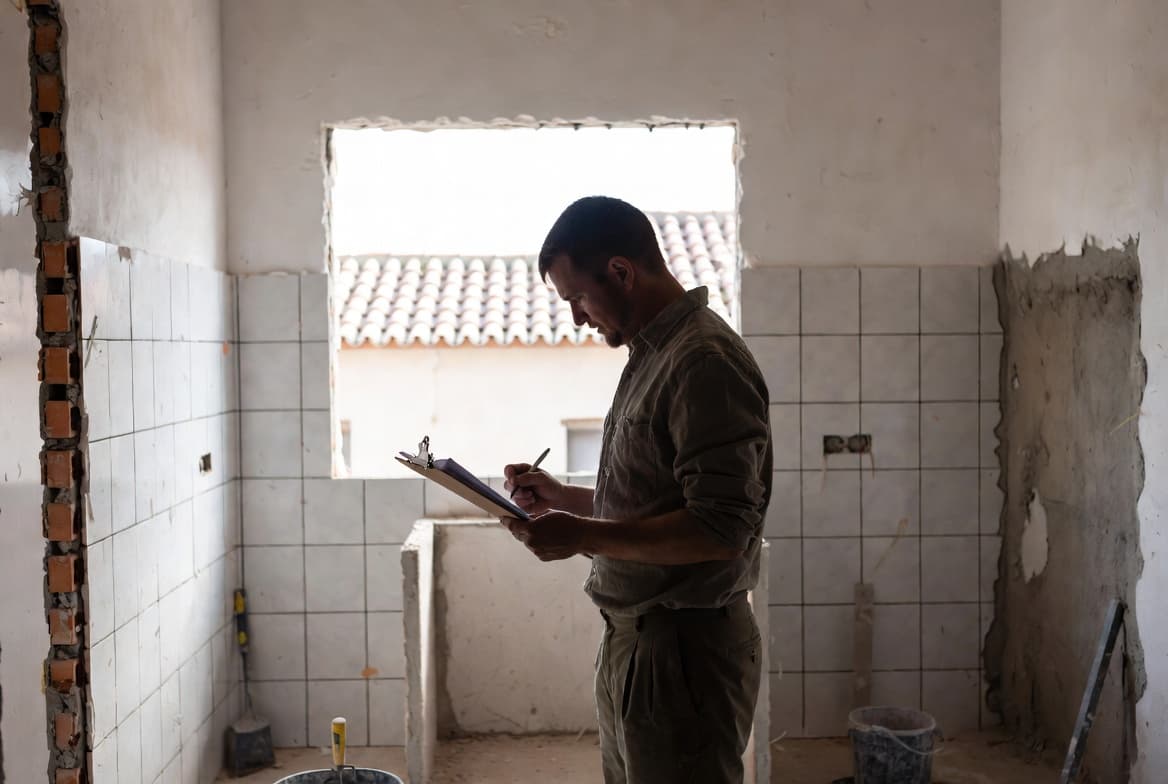
The Ley de Propiedad Horizontal distinguishes between works affecting private elements, the interior of your own property, and works affecting common elements or the exterior appearance of the building. The latter almost always requires community approval.
Work that typically requires approval from the community before proceeding includes:
- Any alteration to the exterior facade - changing window frames, adding shutters, painting your exterior a different colour, installing a security door with a different appearance
- Installing air conditioning units on an exterior wall or communal area - even if every other owner has one, you still need approval for yours
- Enclosing a terrace or balcony - one of the most common sources of community disputes on the Costa del Sol
- Installing a satellite dish or solar panels on an exterior surface or communal roof
- Structural alterations that affect shared walls, floors, or ceilings - in an apartment building, your floor is your downstairs neighbour's ceiling
- Adding a pergola, awning, or fixed structure to a terrace where the terrace forms part of the common elements of the building
- Any work to communal areas - gardens, pool surrounds, parking areas, entrance halls
What you can generally do without community approval
Work entirely within the private interior of your property that does not affect the structure, shared services, or exterior appearance generally does not require community approval. This includes:
- Internal repainting and redecoration
- Replacing internal flooring
- Kitchen or bathroom renovation where the layout stays within your private space and plumbing connections are not altered in a way that affects shared pipes
- Like-for-like replacement of internal fixtures and fittings
- Non-structural internal partition walls
Even for work that seems entirely internal, check your community's statutes before starting. Some communities have additional rules beyond the Ley de Propiedad Horizontal that restrict work during certain hours, require notification before any trade enters the building, or limit the disposal of building waste in communal areas.
How to request community approval
There is no single standardised process, it varies between communities. The general approach is as follows:
- Write to the community president or administrador de fincas describing the work you want to carry out, the materials involved, and the expected timescale. Do this in writing, ideally by email so you have a record.
- The president or administrador will advise whether the matter can be approved by the president alone, requires a vote at the next junta, or requires an extraordinary meeting to be called.
- If a vote is required, the matter goes on the agenda for the next owners' meeting. Depending on the nature of the work, approval may require a simple majority, a three-fifths majority, or unanimous agreement from all owners.
- Once approved, get the decision in writing, either as minutes from the meeting or a written confirmation from the administrador. Keep this document with your property papers.
Do not start work while waiting for approval. If work is discovered before permission has been granted, the community has the right to require you to stop immediately and restore everything to its original state.
The terrace enclosure problem
Enclosing a terrace or balcony is by far the most common source of community disputes on the Costa del Sol. Many expat properties have open terraces that owners want to glaze or enclose to create additional living space. It seems straightforward, it is your terrace, after all.
The complication is that even if the terrace is for your exclusive use, it may legally form part of the common elements of the building under the Ley de Propiedad Horizontal. If it does, any enclosure affects the exterior appearance of the building and requires unanimous approval from all owners in the community, not just a majority.
Getting unanimous approval is significantly harder than a simple majority. One dissenting owner can block the project entirely. Before commissioning any plans or quotes for a terrace enclosure, establish clearly whether your terrace forms part of the common elements and what approval threshold applies. A Spanish lawyer or your administrador de fincas can advise on this.
What happens if you proceed without approval
The community president has the legal authority to require unauthorised works to be halted and reversed. If an owner refuses to comply, the community can take legal action through the courts to enforce the reversal, with the costs falling to the owner who carried out the work.
Beyond the legal exposure, unauthorised works create practical problems when you come to sell. A buyer's solicitor carrying out due diligence will check community meeting minutes and may find a record of disputed works on your property. That is a complication no seller wants at the point of exchange.
Community rules and your renovation project
Before you engage a builder for any work on a community property, establish two things: whether the work needs a permit from the ayuntamiento, and whether it needs approval from the community. Both questions need answering before any money changes hands or any work starts.
SpainTrades lists vetted builders and tradespeople across Málaga and the Costa del Sol who are experienced in working within community properties and understand the approval process. Finding someone who has done this before is considerably easier than briefing a builder who has not.
Find experienced tradespeople in your area at www.spaintrades.es
Important note
The information in this article is intended as a general guide for expats navigating community of owners rules in Spain. It is not legal advice and should not be treated as a complete or definitive account of Spanish law or the rules of any specific community. Every community has its own statutes and internal rules which may go beyond the requirements of the Ley de Propiedad Horizontal. Before carrying out any work on a community property, always check your community statutes, consult your administrador de fincas, and seek independent legal advice from a qualified Spanish lawyer where needed. SpainTrades accepts no liability for decisions made on the basis of this article.