Your Rights as a Homeowner in Spain When Building Work Goes Wrong
When building work goes wrong in Spain, and it does go wrong
A builder who disappears mid-job. A renovation that floods the apartment below. Electrical work that fails an inspection six months after it was signed off. A quote for €15,000 that somehow becomes a bill for €28,000. These are not worst-case scenarios dreamed up to frighten you, they are situations that expats on the Costa del Sol deal with every year.
What most expats do not know is that Spanish law provides meaningful protection for homeowners when building work goes wrong. The protections are not automatic, you have to know they exist and take the right steps to use them. This guide explains what those rights are and how to act on them.
Your rights under Spanish contract law
Any agreement to carry out building work, written or verbal, constitutes a contract under Spanish law. The relevant framework is the Código Civil, which sets out the basic rights and obligations of both parties in a service contract. Under this framework, a tradesperson or builder is obliged to:
- Carry out the work to a reasonable standard of quality
- Complete the work within the agreed timeframe
- Charge the agreed price and not vary it without your consent
- Use materials of the type and quality agreed
- Rectify defective work at their own cost within a reasonable period
If a builder fails on any of these points, you have grounds for a claim under the Código Civil. The practical challenge is proving what was agreed, which is why a written contract and a clear paper trail matter so much before work begins.
Your rights under the Ley de Ordenación de la Edificación
For more significant building work, the Ley de Ordenación de la Edificación (LOE) provides additional and stronger protections. The LOE applies to new construction and major renovation work and establishes a tiered system of guarantee periods:
- One year - the builder is liable for defects in finishing work. Cracked tiles, poorly fitted doors, defective paintwork, and similar finishing issues must be rectified within one year of completion at the builder's cost.
- Three years -the builder is liable for defects that affect habitability. This covers problems with insulation, waterproofing, condensation, and installations that make the property uncomfortable or difficult to use as intended.
- Ten years - the builder is liable for structural defects. Foundation problems, structural instability, and any defect that compromises the structural integrity of the building fall under this extended guarantee period.
These guarantee periods run from the date of practical completion, the point at which the work was formally handed over. Keep any completion documentation, as this date matters if you need to make a claim.
What to do immediately when something goes wrong
The steps you take in the first few days after a problem emerges significantly affect your ability to resolve it. Do the following as soon as a problem becomes apparent:
- Stop paying. If the work is ongoing and you have not yet made the final payment, do not make it until the problem is resolved. Withholding final payment is your strongest practical lever and it is entirely legitimate under Spanish law provided the work is genuinely defective.
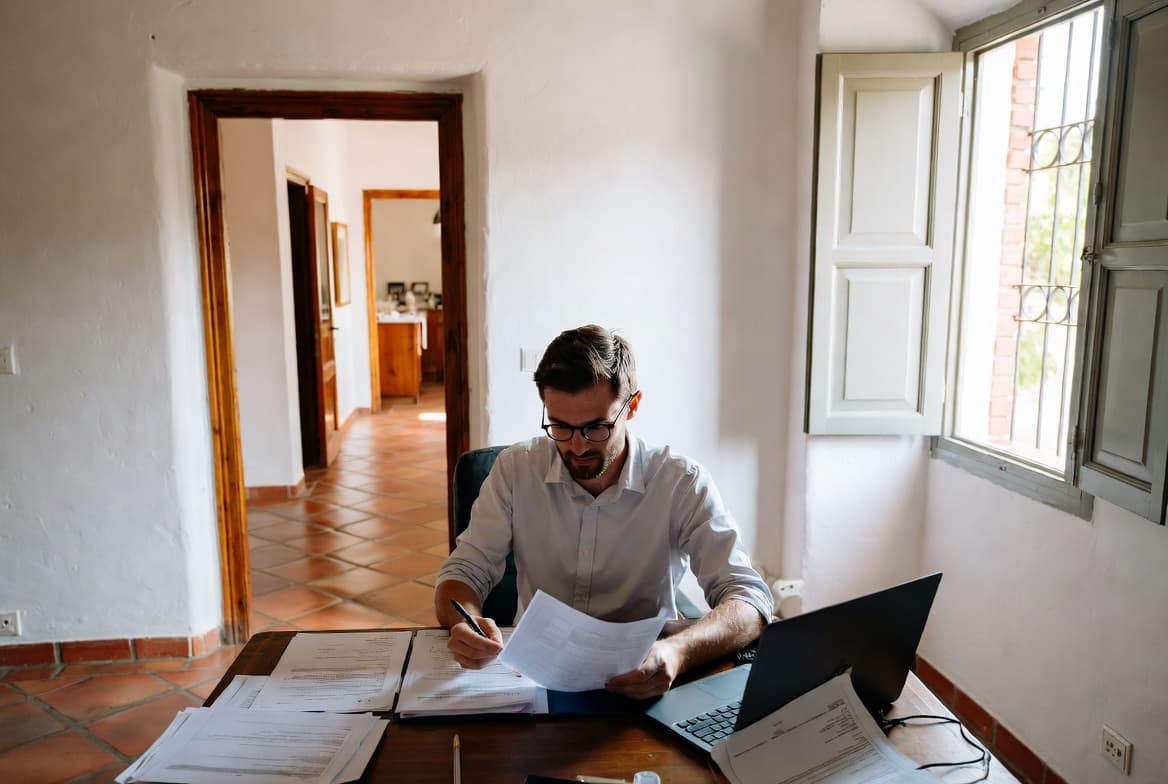
- Document everything. Photographs and video of the defective work, dated and timestamped. Photographs of any damage caused. Every WhatsApp message, email, and written communication with the builder from the start of the job. The original quote and any variations agreed in writing. All of this is potential evidence.
- Notify the builder in writing. Send a written message, WhatsApp is acceptable, email is better, clearly describing the problem and asking them to rectify it within a specific and reasonable timeframe. Keep this message. It starts the formal record of the dispute.
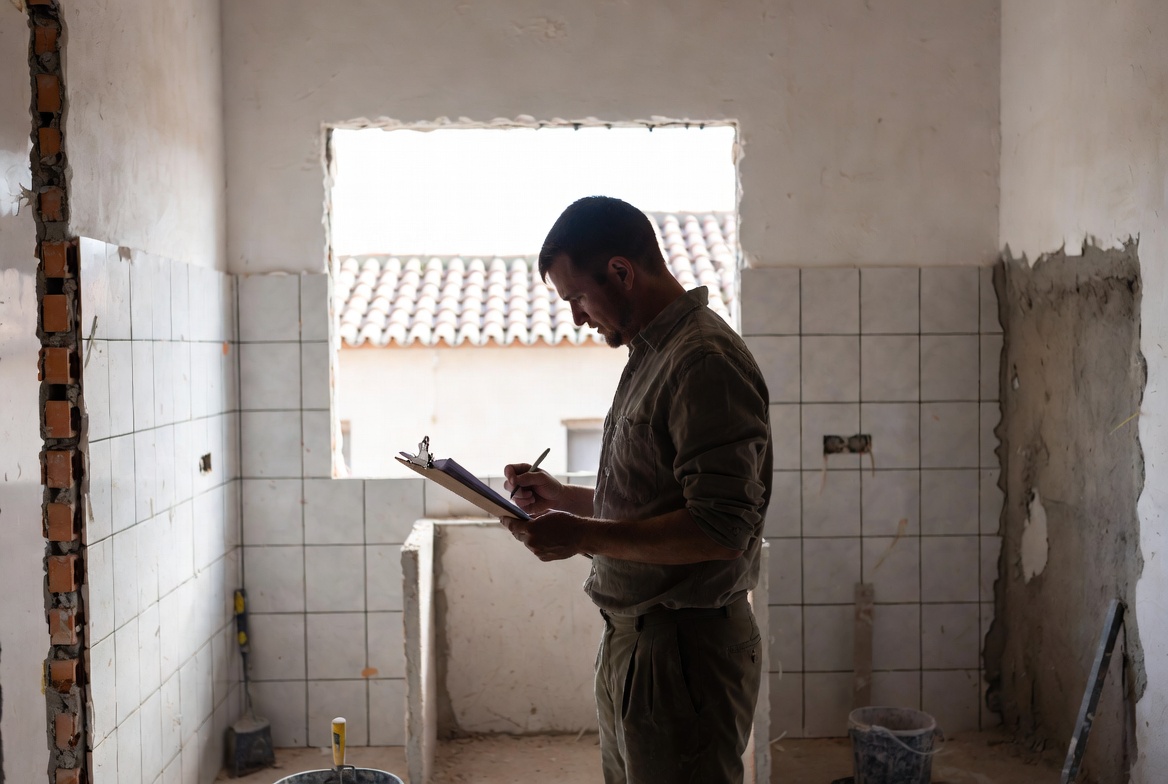
- Get an independent assessment. Commission another registered tradesperson to inspect the work and provide a written opinion on what has gone wrong, what caused it, and what it will cost to put right. This assessment is important evidence if the dispute escalates.
Using the OMIC - the free first step
Before engaging a lawyer, contact your local Oficina Municipal de Información al Consumidor (OMIC). The OMIC is a free consumer advice service run by most Spanish municipalities. They can:
- Advise you on your rights in plain language
- Help you draft a formal complaint letter to the builder
- Mediate between you and the builder in some cases
- Refer you to the Sistema Arbitral de Consumo, the consumer arbitration system, if the builder agrees to participate
The arbitration system is faster and cheaper than court and produces a binding decision if both parties agree to participate. The builder cannot be forced to use it, but many will, partly because refusing to engage with arbitration looks bad and partly because the alternative is a court process that costs everyone time and money.
Your local ayuntamiento can tell you where your nearest OMIC is. In the Málaga area there are OMIC offices in Málaga city, Marbella, Fuengirola, and Nerja among others.
Filing a formal complaint with the Colegio Profesional
If the tradesperson is registered with a professional body, the Colegio Oficial de Aparejadores for builders, the relevant industrial authority for electricians and gas engineers, you can file a formal complaint with that body. Professional bodies take complaints seriously because they have a duty to uphold standards among their members.
A complaint to the professional body will not result in compensation directly, but it can result in disciplinary action against the tradesperson and adds weight to any parallel legal action you are pursuing. It also creates a formal record that may affect the tradesperson's ability to continue working in the sector.
Taking legal action in Spain
If mediation and complaints to professional bodies do not resolve the situation, legal action is the next step. In Spain, small claims can be pursued through the Juzgado de Primera Instancia without a lawyer for amounts up to €2,000. Above that threshold, a lawyer (abogado) and a procurador, a court representative, are required.
For disputes involving significant building work, engaging a Spanish lawyer early is almost always worthwhile. Many offer a free initial consultation, and a lawyer who specialises in construction disputes will quickly assess whether your case is strong enough to pursue and what the realistic outcome is.
Costs to be aware of:
- Lawyer's fees vary considerably - budget €150 to €300 per hour for a specialist construction lawyer in the Málaga area
- Court fees depend on the value of the claim
- If you win, costs are typically awarded against the losing party — but this is not guaranteed and enforcement of a judgment against a builder who has dissolved their company can be difficult
When the builder has disappeared
The most frustrating situation, and not an uncommon one on the Costa del Sol, is when a builder takes a deposit and simply disappears. If this happens:
- File a denuncia, a formal police report, at your local Comisaría de Policía Nacional. Bring all documentation. Taking a deposit and abandoning work can constitute fraud under Spanish criminal law, not just a civil dispute.
- Contact the Agencia Tributaria with the builder's NIF and details of the payment. If the payment was not declared, this creates a separate avenue of pressure.
- Engage a lawyer to pursue a civil claim in parallel with the criminal complaint. The two processes can run simultaneously.
Recovery of money from a disappeared builder is not guaranteed, but a criminal complaint is a significantly more serious matter for the builder than a civil dispute and sometimes produces a rapid resolution.
The best protection is still the right builder from the start
Knowing your rights is important. Not needing to use them is better. The expats who rarely end up in building disputes on the Costa del Sol have one thing in common: they started with a vetted, registered, insured builder with a track record of good work and good reviews.
SpainTrades lists tradespeople across Málaga and the Costa del Sol who have been verified and reviewed by real expat clients. Every listing includes registration details and client reviews so you can make an informed decision before anyone sets foot on your property.
Find a tradesperson you can trust at www.spaintrades.es
Important note
The information in this article is intended as a general guide for expats who have experienced problems with building work in Spain. It is not legal advice and should not be treated as a complete or definitive account of Spanish law. Every situation is different and the appropriate course of action will depend on the specific facts of your case. If you are involved in a building dispute in Spain, always seek independent legal advice from a qualified Spanish lawyer as early as possible. SpainTrades accepts no liability for decisions made on the basis of this article.